Beddgelert & Dinas Emrys: Where the Red Dragon Sleeps
2 stops · 7 min of narration · 0.5 km
Narration language: English
Location & walk options
Your location stays in this browser. Keep this page open for GPS playback; you can always choose stops by hand.
FOLLOW THE SMALL DETAILS2 stops
Loading map…
Walking with LegendsTap a number to listen Other places✦ LegendsStory links — not walking routes
STOP 1 / 2
Beddgelert village centre
✦ Legends
1 / 16
clip 1 / 15
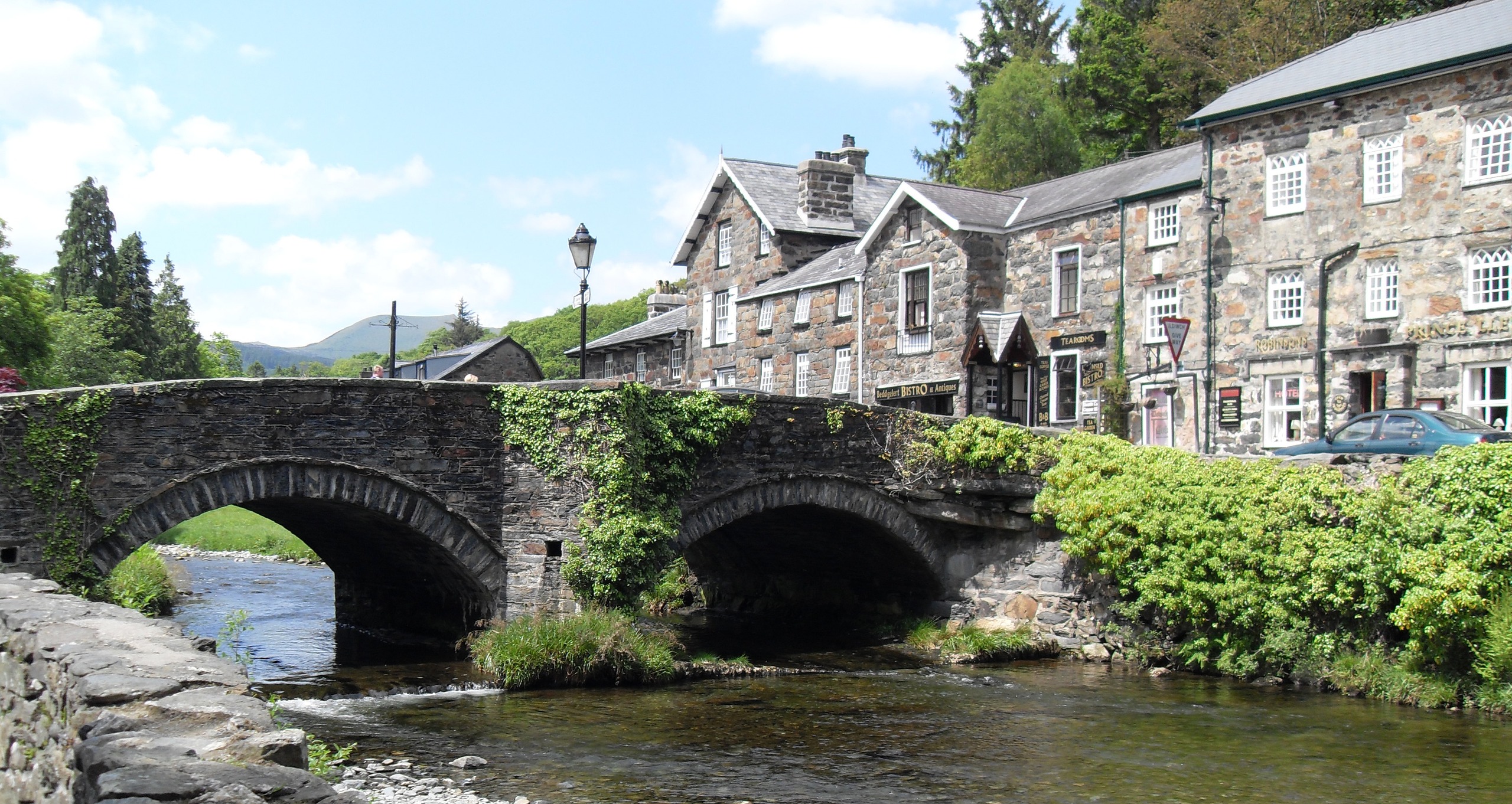
We start in Beddgelert village. The river path will lead us towards the hound's memorial. But before that quiet story, there is a king trying to make a mountain hold still. Keep our starting point on the map. We are leaving it only to follow the tale.
We start in Beddgelert village. The river path will lead us towards the hound's memorial. But before that quiet story, there is a king trying to make a mountain hold still. Keep our starting point on the map. We are leaving it only to follow the tale.
Dinas Emrys rises to the north-east of the village. The National Trust's trail begins at Craflwyn, below the hill. We can follow its story here on the map before deciding whether to make that separate climb. First, imagine the hill as a king might have seen it: somewhere to build a refuge.
Here is the scene to imagine: a ruler looking for a stronghold, with workmen hauling stone up a Welsh hillside. In Geoffrey of Monmouth's medieval telling, the king is Vortigern. He chooses his site and orders a tower. By daylight, it seems a problem that labour and stone can solve.
Then the ground swallows their work. What the builders have put together disappears into the earth. They begin again. The same thing happens. The king can command the men to build, but he cannot command their building to stay above ground. Each fresh attempt leaves him with the same unanswered question.
His advisers offer an answer far worse than the failure. Find a boy who has no father, they say. Kill him, and use his blood in the foundations. That, they claim, will make the tower stand. They sound certain, but nobody has checked. Their explanation asks nothing of them. It asks everything of a child.
The child brought before Vortigern is Merlin, also called Ambrose in Geoffrey's account. He does not accept the advisers' explanation. He asks the question nobody has asked: what is actually under the ground? They cannot say. Their certainty has nothing behind it.
So Merlin says: dig. Don't guess, look. Beneath the foundations, he says, there is water. The workmen open the earth and find a pool, just as he predicted. The boy who was supposed to be the remedy understands the problem better than the men who condemned him.
But that is only the first discovery. Drain the pool, Merlin says, and there will be two hollow stones beneath it. Inside them, two dragons are sleeping. The king orders the water drained. The stones are there. So are the dragons. One is white. The other is red.
They come out and fight, breathing fire. At first the white dragon has the advantage, driving the red one towards the end of the pool. Then the red turns and attacks again, forcing its pursuer back. Above them sits the king, whose attempt to secure a tower has opened something much larger beneath it.
Vortigern asks Merlin what the fight means. Geoffrey turns the struggle into a prophecy about peoples and kingdoms, defeat and eventual resistance. But the tale also seems to ask us something. The king wanted a tower. What he needed was to learn what lay under it, and he only learned it because a child was allowed to ask.
The shorter story the National Trust tells visitors today ends with the white dragon flying away and the red returning to its lair. That is the version behind our sleeping dragon. The tellings differ, but the hill keeps the question alive: what might lie underneath the place you think you understand?
Here we meet Merlin for the first time. An earlier account, the History of the Britons, calls the boy Ambrosius. Geoffrey's later telling calls him Merlin as well. We will meet him again on other walks. Remember how he arrives: as the one who asks what lies beneath.
Back on the real hill, there are ruined defences, stone tower foundations and a marshy pool. Cadw says the remains span several periods, and their dating is not conclusive. They are worth exploring in their own right, but they are not proof of dragons.
To visit, make it a separate outing from Craflwyn. The National Trust's return trail is about three and a half kilometres, allowing an hour and a half to two and a half hours, with a steep, rocky final ascent.
Back in our village, the dragon hill stays on the map as a nearby reference. Now we follow the river to a much smaller monument, and a story with the opposite ending. Here nobody asks what lies beneath the surface, and the truth arrives one terrible moment too late.
Transcript
We start in Beddgelert village. The river path will lead us towards the hound's memorial. But before that quiet story, there is a king trying to make a mountain hold still. Keep our starting point on the map. We are leaving it only to follow the tale.
Dinas Emrys rises to the north-east of the village. The National Trust's trail begins at Craflwyn, below the hill. We can follow its story here on the map before deciding whether to make that separate climb. First, imagine the hill as a king might have seen it: somewhere to build a refuge.
Here is the scene to imagine: a ruler looking for a stronghold, with workmen hauling stone up a Welsh hillside. In Geoffrey of Monmouth's medieval telling, the king is Vortigern. He chooses his site and orders a tower. By daylight, it seems a problem that labour and stone can solve.
Then the ground swallows their work. What the builders have put together disappears into the earth. They begin again. The same thing happens. The king can command the men to build, but he cannot command their building to stay above ground. Each fresh attempt leaves him with the same unanswered question.
His advisers offer an answer far worse than the failure. Find a boy who has no father, they say. Kill him, and use his blood in the foundations. That, they claim, will make the tower stand. They sound certain, but nobody has checked. Their explanation asks nothing of them. It asks everything of a child.
The child brought before Vortigern is Merlin, also called Ambrose in Geoffrey's account. He does not accept the advisers' explanation. He asks the question nobody has asked: what is actually under the ground? They cannot say. Their certainty has nothing behind it.
So Merlin says: dig. Don't guess, look. Beneath the foundations, he says, there is water. The workmen open the earth and find a pool, just as he predicted. The boy who was supposed to be the remedy understands the problem better than the men who condemned him.
But that is only the first discovery. Drain the pool, Merlin says, and there will be two hollow stones beneath it. Inside them, two dragons are sleeping. The king orders the water drained. The stones are there. So are the dragons. One is white. The other is red.
They come out and fight, breathing fire. At first the white dragon has the advantage, driving the red one towards the end of the pool. Then the red turns and attacks again, forcing its pursuer back. Above them sits the king, whose attempt to secure a tower has opened something much larger beneath it.
Vortigern asks Merlin what the fight means. Geoffrey turns the struggle into a prophecy about peoples and kingdoms, defeat and eventual resistance. But the tale also seems to ask us something. The king wanted a tower. What he needed was to learn what lay under it, and he only learned it because a child was allowed to ask.
The shorter story the National Trust tells visitors today ends with the white dragon flying away and the red returning to its lair. That is the version behind our sleeping dragon. The tellings differ, but the hill keeps the question alive: what might lie underneath the place you think you understand?
Here we meet Merlin for the first time. An earlier account, the History of the Britons, calls the boy Ambrosius. Geoffrey's later telling calls him Merlin as well. We will meet him again on other walks. Remember how he arrives: as the one who asks what lies beneath.
Back on the real hill, there are ruined defences, stone tower foundations and a marshy pool. Cadw says the remains span several periods, and their dating is not conclusive. They are worth exploring in their own right, but they are not proof of dragons.
To visit, make it a separate outing from Craflwyn. The National Trust's return trail is about three and a half kilometres, allowing an hour and a half to two and a half hours, with a steep, rocky final ascent.
Back in our village, the dragon hill stays on the map as a nearby reference. Now we follow the river to a much smaller monument, and a story with the opposite ending. Here nobody asks what lies beneath the surface, and the truth arrives one terrible moment too late.
✦ Folklore
Craflwyn: visiting the dragon hill
Craflwyn is the National Trust starting point for a separate outing to Dinas Emrys, the hill associated with Merlin and the two dragons. This short introduction explains that optional visit; select Dinas Emrys for the full legend. The operator describes a return trail of about three and a half kilometres, allowing one and a half to two and a half hours, with a steep, rocky final ascent. Check current access and weather before setting out. The photograph shows Dinas Emrys, the destination of that separate outing, not the Craflwyn entrance.
William Robert Spencer’s ballad tells of a prince who sees blood on his hound and acts before searching for his child. The child is safe; the hound has defended him from a wolf. The cry comes too late to undo the killing. Gelert’s memorial gives the tale a place beside Beddgelert, but its documented history begins around 1802; it does not prove a medieval burial. The village and memorial are the two stops of this walk.
In Geoffrey of Monmouth’s telling, Vortigern’s foundations fail. His advisers demand a child’s blood, but Merlin asks what lies beneath. Digging reveals water and two dragons: the boy survives because he questions a confident answer. The National Trust tells a different ending in which the red dragon returns to its lair. Dinas Emrys is the real hill associated with this story; its remains are not proof of dragons. Listen from Beddgelert or explore the reference pins. Craflwyn starts a separate National Trust trail, with a steep, rocky final ascent; neither reference is a stop on this village walk.